CHAMELEONOLOGY: 

Chameleon Natural History...


Among the most striking local forms of Furcifer pardalis, the Beforona population radiates an extraordinary palette that remains little known. Males display a vivid orange‑red belly, contrasting with greenish upper flanks that shimmer under forest light. A crisp white dorsal crest and a delicate white strike across the flanks add sculptural...

People often hear vague claims about ultraviolet light: that it "makes vitamin D" or "helps reptiles stay healthy." The truth is far more complex. To understand UV's role in chameleon husbandry, we must begin at its cosmic origin—the Sun—and then unfold the distinct functions of UVA, UVB, and UVC.

Chameleons climbing cage mesh is not entertaining—it is dangerous. Their delicate claws can become trapped in the mesh, leading to dislocation or even complete tearing away of a phalanx. Such trauma results in bleeding and creates a direct pathway for infection. Although chameleons can survive these injuries, they endure stress, pain, and potential...

Social media often shows chameleons near birds—perched beside them, approached by them, even confronted by them. These scenes may seem peaceful, but they are deeply misleading. This practice is unethical and should be condemned by responsible keepers and educators.

Videos on YouTube and Facebook often show chameleons sitting under misting systems, eyes closed, head lifted, with water running over their bodies. Owners claim their animals "love it," that they "have a choice," and that they "do well."

There appears to be a population of Calumma cf. radamanus in northwestern Madagascar, clearly distinct from the syntopic Calumma boettgeri. The first documentation was made in 2019, when a female specimen was photographed in situ. Because the record was of a female, the morphology of the male remains unknown, leaving a critical gap in the...

This concept has been around for a long time. It has been proven wrong, and many fought for decades in social media, education, and books to establish the truth: chameleons need large cages. In fact, legislation in progressive countries such as Germany and Switzerland sets minimum cage sizes far exceeding global standards, making small cages...

Some argue that captive-bred morphs—animals selectively bred for unusual colors, patterns, or traits—are inherently "evil." Critics often point to genetic degradation, inbreeding, and the artificiality of these animals as proof that morphs are unethical or harmful.

Despite decades of research, breeding trials, and a growing body of scholarly and popular publications, the digital landscape surrounding chameleon care is catastrophically polluted. Even with commendable efforts from a handful of high-quality Facebook groups and forums, the internet remains a chaotic swamp of misinformation, where fragments of...

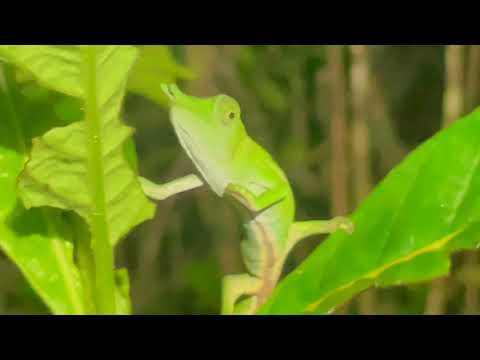
Endemic to Montagne d'Ambre in northern Madagascar, Furcifer petteri is a striking chameleon whose normal coloration in both sexes is a uniform, vivid green. This calm hue dominates the forest canopy, blending the species seamlessly into its environment. Yet when disturbed or excited, the transformation is immediate and dramatic: the smooth green...

Chameleons sometimes perform a peculiar ritual that can appear alarming: their eyes bulge, rotate, and move in ways that seem unnatural. Many keepers mistake this for illness and rush to veterinarians, but it is in fact a normal, self‑cleaning behavior. Known as eye cleaning, the process is triggered by mechanical irritation, infection, or debris...

Calumma gehringi is a recently described Malagasy chameleon, endemic to the Tsaratanana Massif and surrounding Bealanana District in northern Madagascar, occurring between 730–1540 m elevation. It was formally recognized in 2017 after taxonomic revision of the Calumma guibei complex. The species is oviparous, with its holotype collected at...

The short‑horned chameleons of Andasibe are nothing less than spectacular. Their horns, far from modest, rise with a quiet might, and their occipital flaps—vast, like elephant ears—make them among the most dramatic silhouettes in the entire chameleon family. When nervous, they hiss and flare these flaps, transforming themselves into creatures far...

Nosy Tanikely is not just an island—it is a secret kept by the sea. A volcanic speck, barely 3.4 square kilometers, wrapped in coral and guarded by tides. It is a national park of dual realms: marine and terrestrial, accessible only by permit, only by day, and only to those who ask gently.

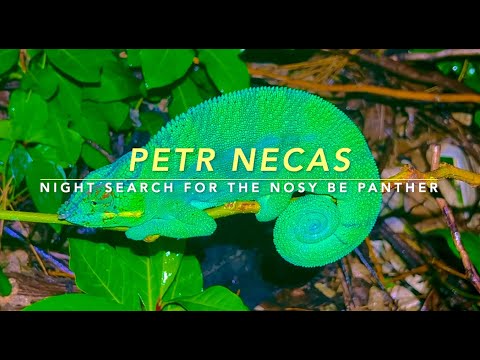
In the hush of the forest, when the last lemur call fades and the canopy exhales its mist, the search begins—not with noise, but with silence sharpened into focus. The night is not empty; it is tuned. Every step is a calibration of senses, every breath a pact with the unseen.

Taxonomic literature is dense with Latin abbreviations—cryptic to most, but precise in function. Even outside formal taxonomy, these terms appear in field notes, museum labels, conservation reports, and scientific articles. Understanding them is not just useful for specialists; it's essential for anyone navigating biological documentation, species...

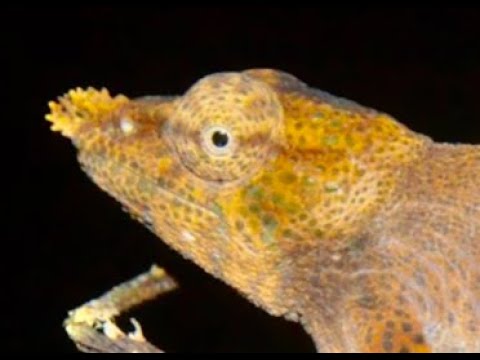
Calumma peltierorum Raxworthy & Nussbaum, 2006 is a microendemic chameleon restricted to montane rainforest in northern Madagascar. The type locality is Mahajanga Province, Bealanana Fivondronana, Tsaratanana, Mangindrano–Maromokotro trail, Matsaborimaiky (14°09.175'S, 48°57.431'E), at 1900–2050 m elevation. This arboreal species is...

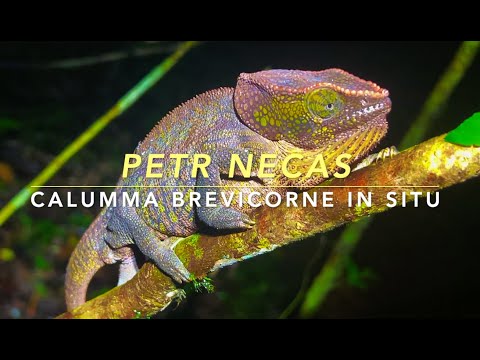
Calumma amber Raxworthy & Nussbaum, 2006 is a montane chameleon confined to the humid evergreen forests of Montagne d'Ambre in Antsiranana Province. Originally considered a population of C. brevicorne, it was described as distinct based on occipital lobe morphology and hemipenial characters. Adults exhibit robust cranial ornamentation, with males...

Brookesia peyrierasi Brygoo & Domergue, 1974 is a microendemic chameleon restricted to humid lowland forest fragments around Nosy Mangabe and Maroantsetra in northeastern Madagascar. Adults reach only 30–40 mm total length, ranking among the smallest reptiles globally. Morphologically, it is adapted to a terrestrial, leaf‑litter existence:...

My projects:   ARCHAIUS   │   CHAMELEONS.INFO