CHAMELEONOLOGY: 

Chameleon Natural History...


On this day, we celebrate the dazzling diversity of life. Chameleons, with their shifting colors and quiet resilience, remind us of nature's brilliance and adaptability. Protecting them means protecting the balance of our ecosystems and the wonder of wildlife everywhere.
Let's honor their place in the wild—and commit to keeping their habitats safe...

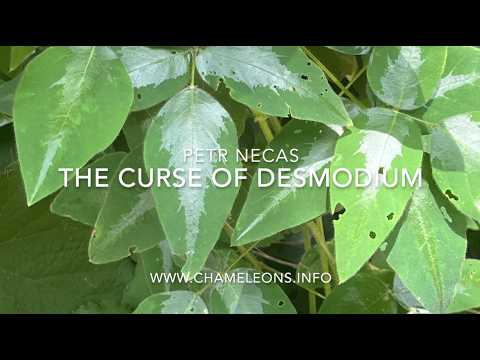
Desmodium, an invasive plant introduced from South America, is spreading rapidly across Madagascar and poses a serious threat to small chameleon species. Its stems are covered with sticky, hooked hairs that easily trap delicate reptiles, especially hatchlings. Many young chameleons die after becoming ensnared, unable to free themselves.

Blood-sucking mites in chameleons represent a fascinating but often overlooked dimension of reptile parasitology. These mites, belonging primarily to families such as Dermanyssidae and Macronyssidae, feed on lymph and blood, producing localized irritation and mild necrosis but not transmitting pathogens. Their activity is restricted to hematophagy,...

Female Furcifer oustaleti exhibit striking variability in coloration that reflects both their physiological state and reproductive condition. In normal circumstances, females are typically a uniform green, sometimes accented with darker mottled patterns. This cryptic coloration helps them blend into foliage and avoid detection. However,...

On St. Valentine's Day, all who cherish chameleons are, by definition, already in love—for to love a chameleon is to embrace wonder itself. This day belongs to you, the guardians of shifting colors and gentle movements.

Propithecus coquereli, the Coquerel's sifaka, is a striking lemur native to northwestern Madagascar. With its creamy white coat and chestnut patches, it moves through the forest canopy with an elegance that has earned it comparisons to chameleons.

Many keepers and even some books claim that the high casque—the raised part of the chameleon's head behind the eyes—is used to store water. Some go further, imagining bizarre mechanisms: water sucked through the eyes, pumped into the crest, or dew collected and funneled into the mouth. These stories are not just wrong—they are anatomical nonsense.

The idea that chameleons are never eaten is a convenient fiction. In reality, across Africa, their consumption is documented in contexts of subsistence, ritual, and survival. The practice is not widespread, but it exists—and it challenges the myth of chameleons as untouchable icons of biodiversity.

My friend from Kenya, Nikunj Shah, recently came across a remarkable female slender chameleon (Chamaeleo gracilis) near Voi. The encounter challenged the old superstition that chameleons are lazy and slow. This individual reacted with surprising vigor: she puffed up her body, fought back, and displayed intense aggression, leaving no doubt about her...

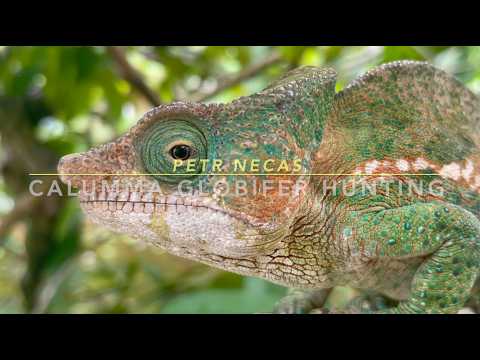
Chameleon tongue projection is one of the most extraordinary feeding adaptations in reptiles. Powered by specialized accelerator muscles and elastic tissue, the tongue launches with explosive speed, often exceeding the length of the body. In Calumma globifer, this ballistic strike is particularly impressive: the tongue shoots forward with...

Calumma hilleniusi is a microendemic chameleon restricted to the high-altitude forests of the Ankaratra massif in Madagascar. It is rarely observed and considered extremely endangered due to its tiny range and lack of formal conservation status. This species belongs to the Calumma brevicorne group but is notably smaller and confined to elevations...

Calumma parsonii cristifer is a subspecies of the Parson's chameleon, notable for its striking courtship displays. For most of the year, both sexes remain cryptically colored in shades of green, bluish tones, and browns, blending seamlessly into their forest environment. During the breeding season, however, coloration shifts dramatically....

Male Furcifer pardalis chameleons from Ankify display a fascinating blend of assertiveness and restraint during courtship. When a male encounters a female, he often begins with vivid color displays and deliberate movements, signaling his readiness to mate. These behaviors can appear imposing, as the male attempts to assert his presence and test...

Chameleons possess one of the most remarkable feeding mechanisms in reptiles: ballistic tongue projection. The tongue apparatus consists of an accelerator muscle that contracts around a stiff cartilage, launching the tongue at high speed. In Calumma parsonii, the Parson's chameleon, this mechanism reaches its peak performance. As one of the largest...

Brookesia superciliaris, one of Madagascar's leaf chameleons, is a small, cryptic species inhabiting humid lowland and mid-elevation rainforest. Adults measure only a few centimeters, with a laterally compressed body, short tail, and characteristic supraocular "eyebrow" projections that give the species its name. Their coloration blends...

Small chameleons and juveniles often choose the ends of twigs or blades of grass as sleeping sites because these positions reduce predation risk. At night, arboreal predators such as snakes or mammals find it harder to reach the very tips of thin branches, which cannot support their weight. Even if a predator attempts to approach, the movement...

Calumma cristifer, described by Methuen & Hewitt in 1913, is one of two recognized subspecies of the Parson's chameleon. New DNA analzses and their fragmented distribution on different massifs and mid- to high-elevation forestsin easterna nd northern Madagascar show not only, that C. cristifer is a separate species, but that the individual...

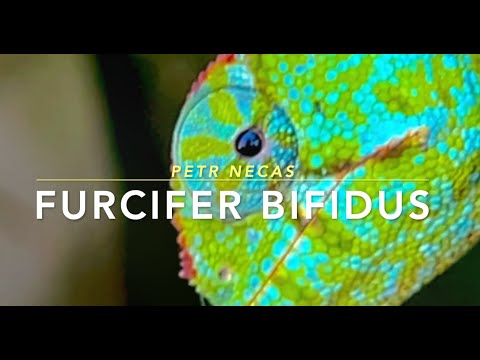
Furcifer bifidus, first described by Brongniart in 1800, is a Malagasy chameleon restricted to the humid rainforests of Madagascar's eastern escarpment. Its range follows the eastern corridor, typically around mid-elevations near 1000 m, where dense vegetation provides the vertical structure necessary for its arboreal habits. The specific epithet...

My projects:   ARCHAIUS   │   CHAMELEONS.INFO