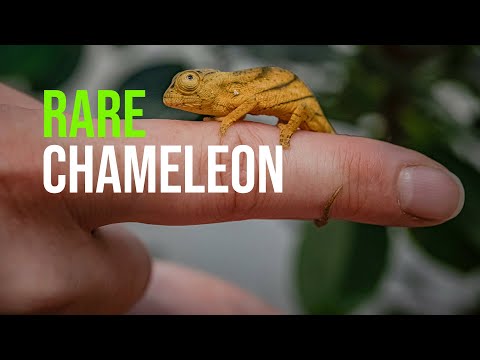
CHAMELEONOLOGY: 

Chameleon Natural History...


The recent Zoo Biology paper on zoo‑housed chameleons claims to evaluate species distribution, breeding, and life expectancy using ZIMS data. In reality, the study demonstrates mainly how little zoos achieve with chameleons and how limited the underlying data are. The authors themselves admit that only 17.8% of all chameleon species appear in ZIMS...

Artificial intelligence — modern machine‑learning systems capable of generating text and images — has grown at a staggering pace. These systems learn from enormous datasets and then imitate patterns they have absorbed. As they develop, they become faster, more fluent, and more convincing. Yet this very fluency hides a dangerous flaw: AI does not...

An origami chameleon begins with the broader tradition of origami itself, a craft that emerged in Japan more than a thousand years ago and gradually evolved from ceremonial paper folding into a global artistic language. Early forms were simple, symbolic shapes used in rituals, but as paper became more accessible, the practice expanded into...

Widespread species remain one of the great enigmas in modern taxonomy. In some cases, what appears to be a single species actually hides multiple cryptic taxa, each with its own evolutionary history. In other cases, the opposite is true: populations spread across enormous geographic ranges show remarkable uniformity, resisting divergence despite...

The recent MaltaToday article about declining chameleon numbers in Malta has generated a surprising amount of emotional reaction, but before anyone treats it as a conservation emergency, the situation needs to be examined with a colder, more structured lens. The article presents the decline as a worrying trend, yet the foundation of this claim is...

The Nosy Faly Panther Chameleon has become highly popular in captivity due to the males' striking coloration when excited. Their palette of light blues, whites, and the characteristic red rain pattern makes this locality especially attractive for captive breeding programs.

The European chameleon (Chamaeleo chamaeleon) has been present on Malta since the mid‑19th century, likely introduced by humans. Until recently, its current distribution and ecology on the island were poorly documented. A new study by Maltese biologists now provides the first detailed overview.

The Panther chameleons from Ankaramibe are among the most visually arresting representatives of the species, a population whose males have earned the evocative name pink panther for a reason. When fully excited, these males can flush into a vivid, saturated pink that seems almost incandescent, a chromatic signal unlike anything seen in most other...

Calumma gastrotaenia, commonly known as the Perinet chameleon, Malagasy side-striped chameleon, or Short-nosed chameleon, is a small, rainforest-dwelling species endemic to Madagascar. It is best recognized by its subtle casque and the characteristic lateral striping along its body.

Imagine a diamond unlike any other — a living jewel, a prism of endless transformation.
The Chameleon Diamond never rests in one shade. It flickers, it breathes, it dances with light. One moment it glows with deep ocean blues, the next it blazes with fiery reds, then dissolves into emerald greens and golden ambers. Each sparkle is a secret,...

Today we honor the conclusion of one of humanity's darkest chapters — a war that shook the very foundations of the world.

From the forests and ridges of Madagascar, chameleons enrich the world with their shifting colors, their mystical presence, and the silent lessons they give to herpetoculture, science, and herping. They show us patience, precision, and resilience. They guard the balance of nature. For this, we owe them not only admiration but protection — a debt we...

The temporal gland sits just above the mouth angle, buried under muscle and bone. When a chameleon opens its mouth wide, the gland's lumen can protrude, releasing a pungent, cheese-like substance. This secretion isn't a carefully crafted chemical—it's decayed cell mass, often colonized by opportunistic bacteria. The result is a foul-smelling paste...

Furcifer lateralis is a medium‑sized Malagasy chameleon, notable for its striking sexual dimorphism and the vivid lateral markings of females during reproduction. It inhabits a wide range of habitats across eastern and central Madagascar, from humid forests to transitional zones. It is quite common not only in undisturbed biotopes but...

Furcifer belalandaensis is a microendemic chameleon from the spiny forest near Belalanda in southwestern Madagascar, first described in 1970 by Brygoo & Domergue. Males reach around 26 cm, with a low casque, subtle rostral appendage, and faint lateral stripe, distinguishing them from related species. It is still present but under terrible...

We chameleons have forged a weapon. It is lightning in motion, the punch of a boxer, the shot of a sniper. Our tongues do not creep forward — they fire. In a fraction of a heartbeat, prey is struck down, seized before it even knows it has been targeted.

For centuries, naturalists have wondered how chameleons spread across Africa, nearby islands, and even into Asia and Europe. A recent phylogenetic study of 181 species across nine regions — from North Africa and Arabia to Madagascar, Comoros, and India — highlights three decisive traits: coastal proximity, body size, and extreme life cycles.

Page two of the Malagasy passport carries a stylized chameleon. The drawing is not precise enough to pin down species, but the outline leaves no doubt.

Communal egg‑laying in chameleons is rare. Archaius tigris is known to do it, and now a similar scene was observed in Madagascar's Itremo Massif. In January, one Furcifer minor female laid eggs on a sunny riverbank; another began laying just 30 cm away, and two days later a third nested between them. All nests were 2–3 m from the water,...

This three‑episode series presents one of the most unique visual documents ever made about Madagascar's disappearing wilderness. Filmed in 2014, it captures landscapes, wildlife, and field expeditions that no longer exist in the same form today, giving the series genuine historical value. The footage shows remote regions, rare species, and the...

Many writers describe the chameleon's head crest as a cap or hat: some do it often, and others copy the same mistake. Once this wrong term spreads, both hobbyists and even scientists start repeating it, turning a precise anatomical feature into a fashion accessory. It must be corrected.

The rediscovery of Furcifer voeltzkowi reads like an adventure story. Hidden from science for more than a century, this chameleon survived unnoticed just across the Bay of Bombetoka, only a short boat ride from Mahajanga. The reasons for its long disappearance are simple: like Furcifer labordi, it is almost impossible to find in the dry season....

David Prötzel shares his adventures from a field trip to Oman, travelling through the Dhofar Mountains and the edge of the Empty Quarter in search of the Arabian chameleon, Chamaeleo arabicus, in the wild. The journey follows his team across remote desert habitats, documenting fluorescent geckos, local reptiles, and the dramatic landscapes of...

The misuse of nose in chameleon descriptions is surprisingly common, some sources do it regularly and consistently (like e.g. www.madcham.de), and many others repeat the same mistake. Once such an error spreads, both casual readers and even scientists can adopt it unconsciously, letting the wrong term propagate through field guides, care sheets,...

We, the chameleons (Chamaeleonidae), coil our tails with deliberate mastery. The word prehensile comes from Latin prehendere — "to grasp, seize, take hold of." Many creatures have found ways to grasp, but our lineage has refined the tail into a true instrument of anchoring.

My projects:   ARCHAIUS   │   CHAMELEONS.INFO